
The Faculty of Medicine at Üsküdar University organized a “Workshop on Pre-Graduation Medical Education Accreditation.” During the workshop, the accreditation process for pre-graduate medical education was discussed in its entirety, and the faculty’s current status was evaluated to identify its strengths and areas for improvement. At the same time, a roadmap for the accreditation process was developed in line with a patient-centered educational philosophy, a culture of sustainable quality, and contemporary educational methods.


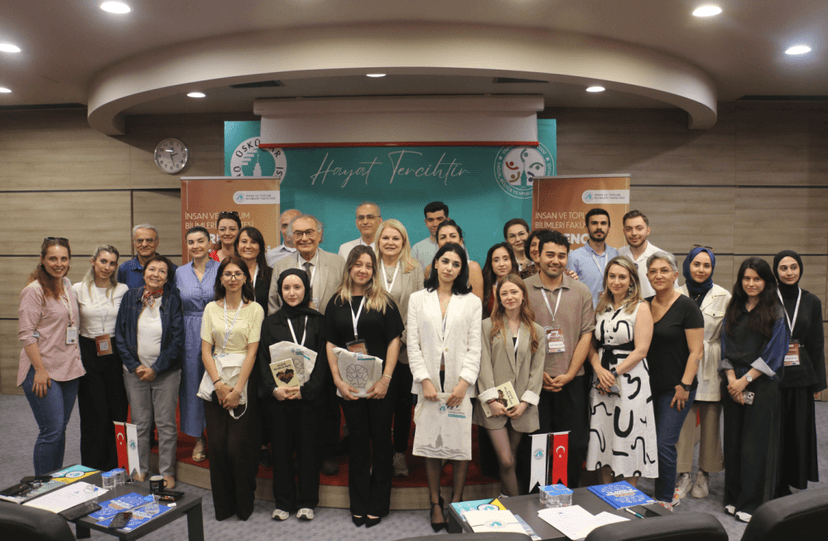
The workshop, held at the Üsküdar University NP Health Campus, was attended by Üsküdar University’s Founding Rector, Psychiatrist Prof. Dr. Nevzat Tarhan, Prof. Dr. Nazife Güngör, Rector of Üsküdar University; Prof. Dr. Haydar Sur, Dean of the Faculty of Medicine; as well as faculty members and administrative staff from the Faculty of Medicine.

The workshop emphasized that accreditation is not merely a certificate, but a process aimed at sustainably improving the quality of education.

Prof. Dr. Nevzat Tarhan, a psychiatrist and Founding Rector of Üsküdar University, drew attention to the importance of institutionalizing a culture of quality during the workshop and emphasized that accreditation processes require continuity. Tarhan said, “Quality is not a one-time audit; it is a constantly evolving mindset. It is not enough to think we are good; we must prove it.”

Noting that accreditation cannot be sustained through superficial approaches, Tarhan said, “If we go through the motions with accreditation, it won’t hold up. Even if it does, it won’t be deep-rooted or sustainable.”

Touching on the quality of medical education, Tarhan emphasized that the process must be conducted with a human-centered approach. “Medical education should be conducted not merely as a means of transferring knowledge, but with a human-centered approach,” said Tarhan, summarizing the fundamental approach of the accreditation process with the phrase, “Write down what you’re going to do, and do what you’ve written down.”
Highlighting the rigor of the oversight mechanisms, Tarhan described the process as a journey that enhances quality in both education and healthcare services.

Speaking at the workshop, Faculty of Medicine Dean Prof. Dr. Haydar Sur emphasized that accreditation is no longer a matter of choice for faculties. Sur stated, “After university entrance exam results are announced, the first question families ask is about accreditation. Not having graduated any students is no longer an excuse.”
Noting that the accreditation process requires a long-term and multifaceted effort, Sur emphasized the need to document strengths and systematically address areas of improvement.


Noting that medical education accreditation has a different structure than healthcare or hospital accreditation, Sur said, “Educational accreditation is a comprehensive evaluation process that covers all components of pre-graduation medical education.” Emphasizing that this approach is based not only on the current situation but also on a sustainable quality philosophy, Sur noted that accreditation fosters a culture of quality that permeates every stage of education.

At the workshop, which was conducted in accordance with national standards:
- Institutional identity,
- Educational program,
- Relationships with students,
- Academic staff,
- Infrastructure and educational facilities, and
- Governance processes—these six main topics were addressed.
A roadmap was developed by identifying areas of strength and those requiring improvement.


It was noted at the workshop that, in addition to lecture-based education, problem-based learning, case discussions, and interactive methods should be increased. It was emphasized that strengthening the integration between basic sciences and clinical sciences would contribute to the quality of education.
As the workshop continued with small-group discussions, the goal was for the views and recommendations that emerged to guide the accreditation process of Üsküdar University’s Faculty of Medicine.