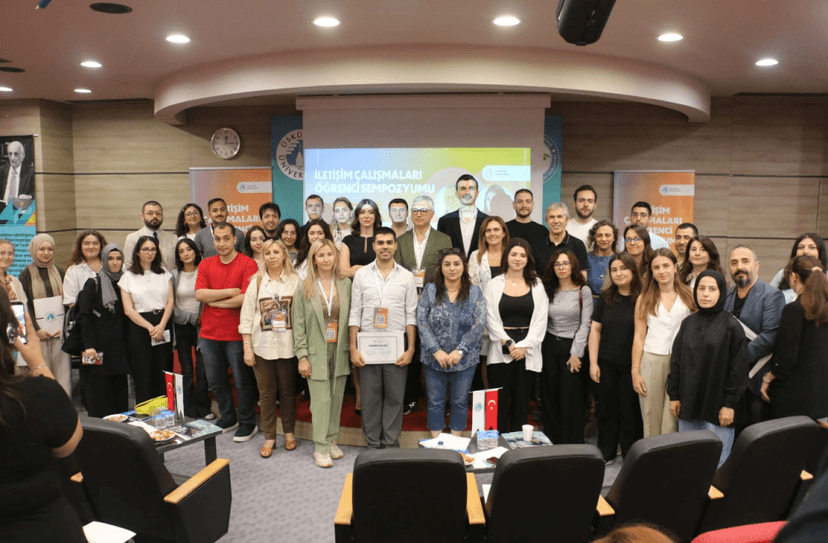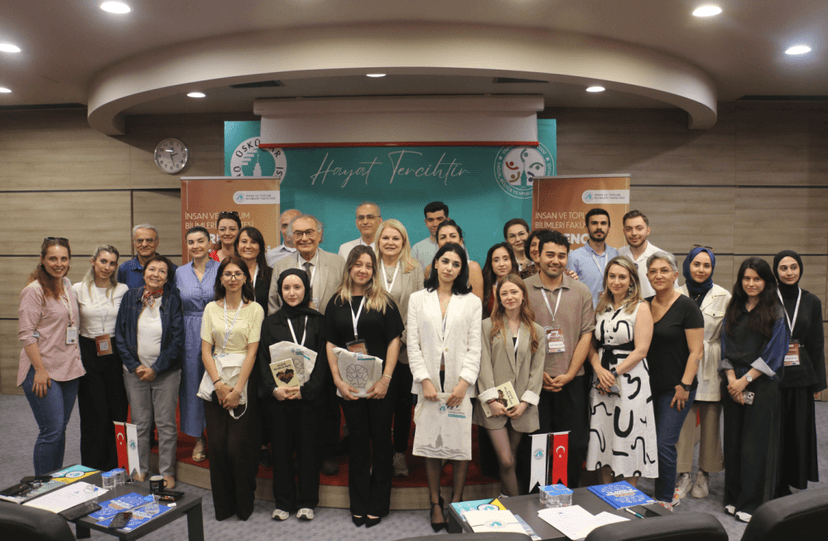

The Faculty of Engineering and Natural Sciences at Üsküdar University organized the “Faculty of Engineering and Natural Sciences Student Conference.” As part of the conference, students had the opportunity to present projects they had prepared in various disciplines in an academic setting. The conference, which included students from many departments ranging from engineering to biomedical engineering, forensic science to molecular biology and genetics, aimed to foster a culture of research and encourage scientific output while sharing innovative and interdisciplinary work.

The conference, held at the Nermin Tarhan Conference Hall and the Kuleli Hall on the Üsküdar University Main Campus, was attended by many faculty members and students, led by Prof. Dr. Osman Çerezci, Dean of the Faculty of Engineering and Natural Sciences.

Prof. Dr. Osman Çerezci, Dean of the Faculty of Engineering and Natural Sciences, delivered the opening address at the conference. Çerezci stated, “This event holds significant value in terms of sharing the outcomes of project-based courses conducted within our faculty. It is also highly valuable in terms of helping our students develop a culture of research and participate more actively in the academic production process. We aim for this event—the result of an intensive preparation process—to evolve into a broader and stronger academic platform in the coming years.”
Noting that they had chosen “ÖPK” (Student Project Congress) as the event’s short name, Çerezci expressed his satisfaction that students would be presenting the projects they had prepared with great effort. Çerezci also noted that the congress could take on an international dimension in the future.

In this context, Computer Engineering (English) Department students Sherwan Ali, İpek Uçar, Yaprak Sevinç Aldoğan, and Yasmine Guidoum presented “A Fuzzy Recommender System with Bipolar Evidence Extension”; Neslihan Yıldız, Sema Nur Aktaş, and Sakarie Hussein Ali presented “A Semantic Score Generation Method for Health Misinformation Detection”; Sude Ünal, Meryem Kaşıkçı, and İlayda Yalçınöz, “A Tensor-Based Structure Preserving Method for Unsupervised Domain Adaptation.”
Students from the Department of Electrical and Electronic Engineering—Talal Soufı, Mery Atobrhan Sereke Tewelde, Mohammed M.R. Albreem, and Habıbatou Sacko—presented “Smart Grid Testbed,” Duru Alara Hacıoğlu, and Gürsel Can Irmak, titled “Design of an Efficient Rectenna System at 5.8 GHz for Wireless Energy Harvesting Applications,” and Zafer Turan and Emre Vural, titled “Adjustable DC Motor Design,” shared their presentations with the participants.

Students from the Department of Industrial Engineering (English) — Sıla Tırpan, Renad Binmahfouz Semanur Balta, and Yavuz Selim Şahin — presented “Feasibility Analysis of Green City Transportation,” Eya Bouassida, Göksu Can, Sevde Ergün, Sude Uykun, Hammam Khalid N. Wadhaifi, Feras Marwan Salem Alzaatreh, “Organic Candle,” and İrem Balta, “Quality Control.”
Software Engineering (English) Department students SayedIman Mostafavi, Hekmatullah Zurmati, “Machine Learning-Based Topological Data Analysis of 3D Knee MRI for Osteoarthritis Classification: An Efficient and Interpretable Framework for Clinically Scalable Assessment,” Hasan Alhatab, Nour Salous, Salman Alkhudhari, and Mohamed Jarrud presented their work titled “Improving EEG-Based ADHD Detection in Children: An LLM-Assisted Machine Learning Extension of Expert-Selected EEG Biomarkers,” while Waleed Mohammad Rahim presented his work titled “An Agent That Browses the Web For You.”

Forensic Sciences Department students Nursena Gökdaş, Nigar Altınoğlu, Başak Dağlıoğulları, and Zehra Öztekin presented “Development of Hidden Fingerprints on Biodegradable Bags: A Comparison of Cyanoacrylate and Dusting,” Beyzanur Keskin, Melek Melis Akdoğan, Asya Sıla Yadikar, and Buse Çelik presented “Physical and Chemical Characterization of Blue and Black Latex Gloves in Forensic Examinations,” Akile Akgül, Nursu Yaman, Semiha Yağmur Taktak, and Yiğit Yancar presented their papers titled “Determination of Viability in Skin Incisions Caused by Cutting Instruments.”
Biomedical Engineering (English) Department students Ali Coşkun, Naciye Nisa Ayaz, Öznur Hesna Köse, and Rahime Zeynep İşçioğlu presented “Wearable Biosensor System for Continuous Sweat-Based Lactate Monitoring,” while Azra Ceylin Anar and Nida Yalınbaş presented “Chitoderm: Hybrid Microneedle Patch for Advanced Second-Degree Burn Wound Care,” and Ayşe Betül Hira, “Prototype for Needle-Free (Oral) Treatment of Phenylketonuria with Acid-Resistant Polyphenol-Enzyme Complexes.”

Chemical Engineering (English) Department students Amjadabdulkhalıq Ahmed Ibrahım Fallatah, Alı Elnadıf, Fıras A.F. Elkaulak, Mohamed Shaheem Mohamed Saeed, Abdullah Ademola Odunmbaku, “Natural Gas – USA,” Eda Nur Adıgüzel, Tuğçe Karagöz, Çağla Sergin, and Rahime Zeynep İşcioğlu presented on “Natural Gas – Turkey,” while Heba Naser Mohamed Elarıfı, Ruba Yusrı Salamah Barham, and Usama Abdulkadır Alı Gure presented on “Natural Gas – Qatar.”
Students from the Department of Molecular Biology and Genetics—Emine Hayrunnisa Tok, Beyza Meryem Aydın, Buse Ilgım Yosmaoğlu, Hatice Bıçak, and Cemre Ceren Güven, presented on “Precise Age Determination via the Integration of DNA Methylation and Machine Learning from Biological Traces Using Forensic Epigenetics – Epitrace-GPT,” and Hatice Bıçak, Buse Ilgım Yosmaoğlu, and Beyza Meryem Aydın presented “Heat Shock Response in the Coral-Symbiont Axis: A Molecular Approach in Mediterranean Corals,” and “MBG-03 Emotional DNA GPT.”
Students from the Department of Molecular Biology and Genetics (English), Sare Yıldırım, Marijus Taraskus, and Melih N. Yeşilbaş, presented “Free Will in a World of Cause, Chance, and Necessity: Scientific and Philosophical Perspectives,” Berk Uluçay, Hanife Bayraktar, and Ata Aksu, “The Striosomal Gate: How Beta Oscillations Disrupt Memory in Parkinson’s Disease,” Taha Ammar Kalkan, and Ulaş Oğuz, “Detection of EGFR, KRAS, and p53 Biomarkers in Lung Cancer via an Aptamer-Based Microfluidic Biosensor System and an AI-Supported Personalized Treatment Approach.”

Following the project presentations, a workshop was held.

In this context, the first winner of the first parallel session was SayedIman Mostafavi and Hekmatullah Zurmati for their project titled “Machine Learning-Based Topological Data Analysis of 3D Knee MRI for Osteoarthritis Classification: An Efficient and Interpretable Framework for Clinically Scalable Assessment.”
The second-place winners in the first parallel session were Talal Soufı, Mery Atobrhan Sereke Tewelde, Mohammed M.R. Albreem, and Habıbatou Sacko for their project titled “Smart Grid Testbed.”
The third project in the first parallel session was “Improving EEG-Based ADHD Detection in Children: An LLM-Assisted Machine Learning Extension of Expert-Selected EEG Biomarkers,” presented by Hasan Alhatab, Nour Salous, Salman Alkhudhari, and Mohamed Jarrud.
The first presentation in the second parallel session was by Berk Uluçay, Hanife Bayraktar, and Ata Aksu for their project titled “The Striosomal Gate: How Beta Oscillations Disrupt Memory in Parkinson’s Disease.”
The second presentation in the second parallel session was “Wearable Biosensor System for Continuous Sweat-Based Lactate Monitoring,” presented by Ali Coşkun, Naciye Nisa Ayaz, Öznur Hesna Köse, and Rahime Zeynep İşçioğlu.
The third project in the second parallel session was “Development of Hidden Fingerprints in Biodegradable Bags: A Comparison of Cyanoacrylate and Powdering Methods.”


Üsküdar News Agency (ÜHA)