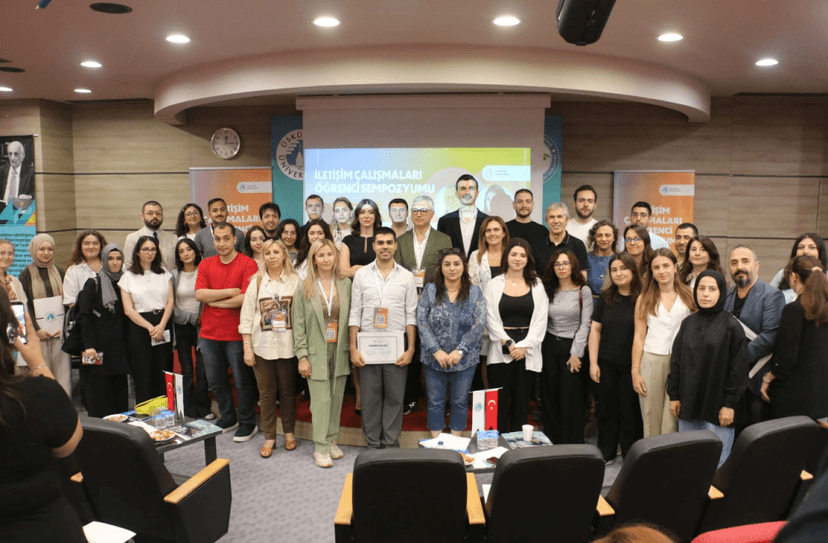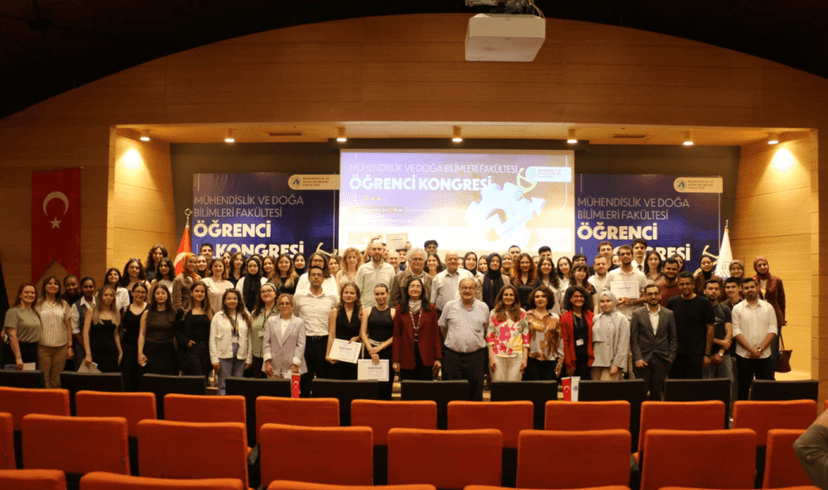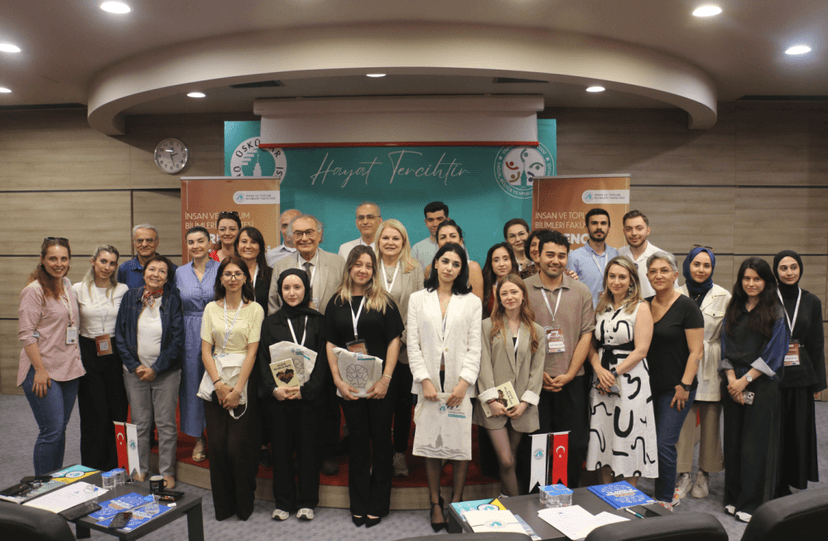

The Faculty of Dentistry at Üsküdar University organized the “1st Project-Themed Student Congress.” The congress, held with the aim of fostering a culture of scientific research among students, supporting their project development skills, and providing a platform for them to share their academic work, featured numerous project presentations. At the congress, students had the opportunity to present the projects they had prepared on a wide range of current topics—from artificial intelligence applications to orthodontics, from implant design to prosthetic rehabilitation, and from patient satisfaction to temporomandibular joint disorders—in an academic setting. Prof. Dr. Nevzat Tarhan, Founding Rector of Üsküdar University, and Prof. Dr. Ergün Yücel, Dean of the Faculty of Dentistry, emphasized the importance of project-based education and scientific research.


The conference, held at the Ibn Sina Auditorium on the NP Health Campus of Üsküdar University, was attended by Üsküdar University’s Founding Rector, psychiatrist Prof. Dr. Nevzat Tarhan, and the Dean of the Faculty of Dentistry, Prof. Dr. Ergün Yücel, along with many other academics and students.

Delivering the opening address at the conference, Üsküdar University Founding Rector and Psychiatrist Prof. Dr. Nevzat Tarhan emphasized the importance of project-based education. Explaining the role of project-based work in the educational process for dental students, Tarhan stated: “Project-based education is very important for all dental students, whether at the undergraduate or graduate level. In educational science, this corresponds to learning through experience. The human brain learns a subject best when it experiences, touches, and applies it. This is how lasting learning occurs. This also occupies the top step of the learning pyramid. A person cannot fully learn something just by hearing about it. They may easily forget what they see, but they rarely forget what they have experienced. This is because lived experiences are encoded into the brain’s chemical memory,” he said.

Emphasizing that project-based work equips individuals with the ability to question and develop different perspectives, Tarhan continued:
“A project begins with asking questions. When faced with something, most people simply see it and move on, but the person who tries to understand by asking, ‘Why is this here?’ sees what no one else has seen. Project work gives us the skill they call ‘thinking outside the box.’ When we start a project, we have a project idea, and this is a hypothesis. First, we need to theorize this hypothesis. Then, we need to set goals regarding its feasibility, create a strategic goal plan, draw up a roadmap, and structure the process.”
Tarhan noted that project-based education is also among the 21st-century skills and emphasized the importance of multidisciplinary work.

Speaking at the opening of the conference, Prof. Dr. Ergün Yücel, Dean of the Faculty of Dentistry, stated that dental education is not limited to theoretical knowledge and clinical skills.
Emphasizing the importance of involving students in scientific research processes at an early stage, Yücel said, “Dental education is not merely about imparting theoretical knowledge or developing manual skills. Our goal is to train dentists who question, investigate, and generate solutions as we bring science into clinical practice. Our conference is a significant demonstration of just how valuable it is for our students, even at the very beginning of their journey, to pursue a scientific problem, conduct literature reviews, and transform an idea into a project. Pursuing a scientific problem is extremely valuable,” he said.

Noting that student projects are the product of hard work and academic discipline, Yücel stated that projects deemed worthy of support under the TÜBİTAK 2209 Student Projects Program would also be presented at the conference.


As part of the conference, students presented projects they had prepared on current topics such as artificial intelligence applications, orthodontics, rational antibiotic use, patient satisfaction, digital measurement techniques, implant design, prosthetic rehabilitation, temporomandibular joint disorders, and bruxism.
The first session began under the chairmanship of Prof. Dr. Yumuşhan Günay and Selin Güvenç. During the session, Talha Altuntaş presented “Evaluation of Answers Provided by Artificial Intelligence Modules to Orthodontic Questions Asked in the DUS,” Aslı Bilgiç presented “Evaluation of Rational Antibiotic Prescribing Practices in Dental Clinics in Light of the Principles of Rational Antibiotic Use,” and Emre Talha Çevik presented his project titled “Evaluation of Patient Satisfaction Levels Among Patients Receiving PDT Services at the Üsküdar University Faculty of Dentistry.”
The second session began under the moderation of Prof. Dr. Nimet Gençoğlu and Ahmet Aydıner. During this session, Furkan Hastaoğlu presented “AI-Supported Subperiosteal Implant Design,” and Emre Ateş presented “Clinical Application Protocols for Direct Composite Restorations in the Anterior Region: A Literature Review Supported by Two Case Studies,” and Rana Söyler presented “The Effects of Digital and Conventional Impression Techniques on Comfort and Physiological Stress in Children.”
The third session began under the chairmanship of Prof. Dr. Hacer Aydınyurt and Zeynep Özan. During the session, Dentist Serdar Sıralar performed a stand-up comedy routine.
The fourth session was chaired by Assoc. Prof. Dr. Neslihan Tınastepe and Bahadır Emre Toy. During this session, Dr. Celal Korkut Yıldırım, President of the Turkish Dental Association and the Istanbul Dental Chamber, presented “Decision Time After Graduation: Dental School, Clinic, or Abroad?” Prof. Dr. Şebnem Begüm Türker, a faculty member at Marmara
University’s Faculty of Dentistry,
presented on “Prosthetic Rehabilitation Alternatives for Teeth with Extensive Tooth Structure Loss,” and Dr. Seda Altop, Assistant Professor, spoke on “Volunteer Dentistry in Africa.”
The fifth and final session of the conference began under the chairmanship of Prof. Dr. Ergün Yücel and Sümeyye Sena Köksal. During this session, Zeynep Dilara Kaya presented “Prototype Production and Functional Validation of a New-Generation Intraoral Appliance for Temporomandibular Joint Hypermobility in Temporomandibular Joint Disorders,” and Buket Selvi Afşaroğulları presented “Prototype Production and Functional Validation of a New-Generation Intraoral Appliance for Temporomandibular Joint Hypermobility,” and Zeynep Sevde Oğuz, “The Effect of Psychological Disorders on Bruxism.”