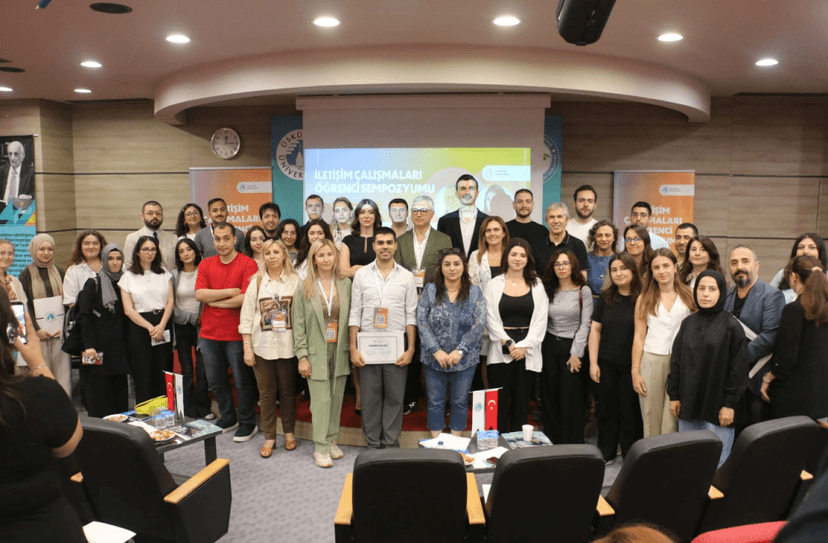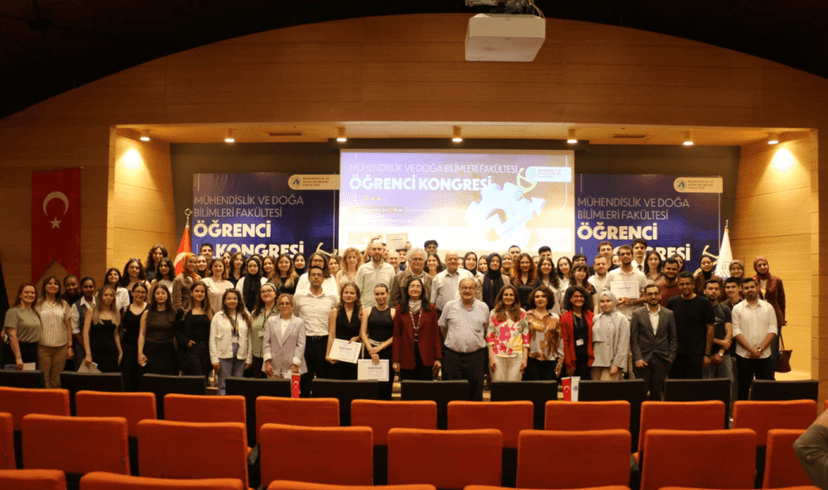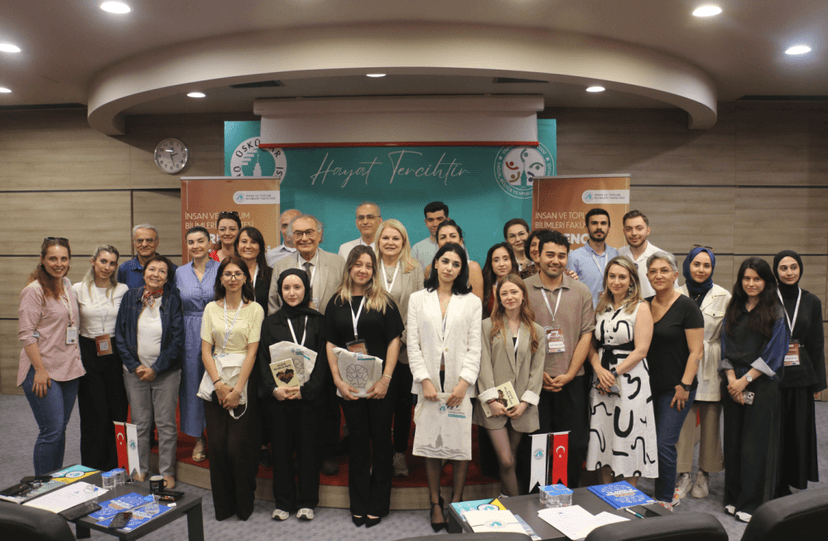

The “1st International Medical Students’ Project and Innovation Congress (ÜTOPİK),” hosted by the Üsküdar University Faculty of Medicine, was held.
Prof. Dr. Nevzat Tarhan, Founding Rector of Üsküdar University and a psychiatrist, stated, “Technology accelerates our lives, but human values guide them.”
“Think not of today’s needs, but of tomorrow’s. When you identify unmet needs, that’s when a project emerges,” said Prof. Dr. Tarhan, adding that every treatment-resistant patient in medicine is, in fact, a unique project in itself.


The “1st International Medical Students’ Project and Innovation Congress (ÜTOPİK),” hosted by the Üsküdar University Faculty of Medicine, was held at the Ibn Sina Auditorium on the Üsküdar University NP Health Campus. Bringing together academics and medical students, the congress served as an important platform for sharing scientific research and innovative ideas.
The opening speeches were delivered by Congress President Begüm Şener, a third-year medical student; Congress Vice President and Associate Dean of the Faculty of Medicine Prof. Dr. Mehmet Aydın; Rector’s Advisor Prof. Dr. Tayfun Uzbay; Vice Rector Prof. Dr. Hikmet Koçak, and the Founding Rector of Üsküdar University, psychiatrist Prof. Dr. Nevzat Tarhan.

Prof. Dr. Nevzat Tarhan, Founding Rector of Üsküdar University and a psychiatrist, stated that the project culture initiatives, which have been ongoing at the university for years, have now become more visible through student conferences.
Noting that the university incorporated project culture and entrepreneurship courses into all undergraduate programs in 2014, Prof. Dr. Tarhan said, “We made the project culture and entrepreneurship course mandatory for first-year students. In subsequent years, project-focused courses were integrated into the curriculum by a Senate decision.”
Emphasizing that every student must prepare a project before graduating, Prof. Dr. Tarhan said, “Students will prepare projects in the format required by TÜBİTAK and the Turkish Health Institutes, gain presentation experience at conferences, and transform this into their graduation project.”
Highlighting the importance of project-based education, Prof. Dr. Tarhan said that the human brain learns best through experience.
“Life is actually a project. A project has a goal, a logical framework, and an action plan,” said Prof. Dr. Tarhan, noting that project management also instills skills in resource management and goal-oriented thinking.
Prof. Dr. Tarhan emphasized that producing projects is not limited to academic publications, adding, “What really matters is the practical value of the work. We must ask what need it addresses.”

Noting that critical thinking, inquiry, and teamwork are among the fundamental skills of our time, Prof. Dr. Tarhan emphasized the importance of a multidisciplinary approach in project development.
“Teamwork is absolutely essential for developing a project. It is necessary to produce results by working as a team under the mentorship of a professor,” said Prof. Dr. Tarhan, adding that projects must be in line with science, reason, and real life, and stating, “A project that is in line with science and reason but out of sync with real life will end up gathering dust on a shelf.”
Noting that artificial intelligence and digital transformation have become decisive factors in professional life, Prof. Dr. Tarhan said that students must develop their digital literacy skills, adding, “If you lack digital literacy and knowledge of artificial intelligence, it is impossible to advance in your profession today.”
Explaining that they are conducting studies at the university to enable medical students to pursue a double major or minor in software and computer engineering, Prof. Dr. Tarhan stated that artificial intelligence has sparked a revolution as significant as the transformations brought about by the printing press and electricity.

Emphasizing that generative artificial intelligence offers new opportunities in academic production but also carries ethical risks, Prof. Dr. Tarhan said that ethical principles must be taken into account when using artificial intelligence, adding, “There are generative artificial intelligence systems that can even write articles. For this reason, rules are being developed to specify the extent to which AI is used in ethics committees,” he said.
Explaining that mathematical modeling and artificial neural networks form the foundation of artificial intelligence, Prof. Dr. Nevzat Tarhan cited the example of Geoffrey Hinton, noting that modeling the brain’s functioning gave rise to the artificial intelligence revolution.
In his speech, Prof. Dr. Tarhan also emphasized ethical values and highlighted the importance of technology being used in the right hands.
Recalling Elon Musk’s statement, “Intelligent people have become cheaper, but people of character have become more valuable,” Prof. Dr. Tarhan said, “In the future, the most valuable people will be those of character.”
“Technology adds speed to our lives, but human values give our lives direction. We must not lose these values or our human qualities. Character building is crucial for this. We must also take this into account when developing projects. It should be in harmony with life and in harmony with people,” said Prof. Dr. Tarhan, emphasizing that ethical principles and the benefit of humanity must be at the center when developing projects.
Calling on students to focus on the needs of the future, Prof. Dr. Tarhan stated that innovative projects arise not from current needs, but from needs that have not yet been met.
“Think about the needs of the future, not today’s. When you identify unmet needs, a project emerges,” said Prof. Dr. Tarhan, noting that every treatment-resistant patient in medicine is, in fact, a separate project.
“Our shortcoming is that we don’t publish our work sufficiently,” said Prof. Dr. Tarhan, adding that conferences will help students develop the skills to give scientific presentations and publish their work.

Vice Rector Prof. Dr. Hikmet Koçak emphasized that the future of the healthcare system will rise on the shoulders of young physicians, stating that students must be educated not only to become good clinicians but also to be individuals who can envision, research, and develop projects.
Noting that the conference was organized to broaden students’ horizons and enable academics to share their experiences with the younger generation, Prof. Dr. Koçak said, “We are gathered here today to broaden your horizons and ensure you benefit from our experiences. Because the future now rests on your shoulders.”
Emphasizing that the foundation of medical education lies in training good physicians, Prof. Dr. Koçak stated, “A doctor will first and foremost serve their patients. We strive to train physicians who are self-confident, unafraid of patients, capable of making accurate diagnoses, and administering proper treatment.”
However, noting that the practice of medicine is not limited to clinical applications, Prof. Dr. Koçak emphasized that accessing knowledge and keeping up with evolving scientific developments are also of great importance. He noted that knowledge in the field of medicine changes very rapidly, and that artificial intelligence and digital technologies are accelerating this transformation even further.
Prof. Dr. Koçak stated that the university is ready to support students in developing projects and emphasized the importance of students collaborating with academics from different disciplines.
Advising students to study the life stories of scientists from the past, Prof. Dr. Koçak said, “Research the challenges scientists faced. When you compare the resources available back then with today’s conditions, you’ll see that you have far greater advantages in terms of accessing information today,” he said.
Stressing that students must be passionate about their work, Prof. Dr. Koçak said, “We ask our resident colleagues, ‘How many surgeries did you perform in your dream?’ If surgery doesn’t appear in your dreams, you cannot be a good surgeon.”

Rector’s Advisor Prof. Dr. Tayfun Uzbay noted that the production of knowledge and scientific thought are the most important forces shaping the future of societies, and called on young people, “Never be afraid to ask questions, think in a multidisciplinary way, and never give up on saying, ‘I can do it.’”
Stating that creating projects and thinking innovatively are not only key to academic success but also fundamental elements that shape the future of societies, Prof. Dr. Uzbay said, “To generate knowledge, you need to think, create projects, and ensure these projects lead to innovation. It’s not about repeating things; it’s important to question what could be new, more practical, and more beneficial.”
Highlighting the importance of future-oriented work, Prof. Dr. Uzbay said, “Global competition is no longer determined by brute force, but by knowledge and the ability to apply it. Knowledge strengthens defense, the economy, and quality of life alike.”
“The person who invented the microscope was not a professor, but a fabric merchant,” said Prof. Dr. Uzbay, explaining that the lens developed to examine the quality of fabrics eventually evolved into a microscope.
Touching on brain research—one of the university’s thematic areas—Prof. Dr. Uzbay added, “We still lack a comprehensive theory of the brain today. This is because we always look at the brain from a single perspective. However, we need anthropology, sociology, philosophy, and other disciplines just as much as we need neurobiology. While studying medicine, you should also engage with anthropology, sociology, and philosophy. Because science now advances within a multidisciplinary framework,” he said.
Noting that a scientist’s identity begins to take shape during university years, Prof. Dr. Uzbay said, “A scientific personality does not develop later in life. Just as athletes are trained from a young age, the scientists of the future must also begin to develop their identities during their university years.”

Prof. Dr. Haydar Sur, Dean of the Faculty of Medicine at Üsküdar University and Academic Chair of the Congress, highlighted the importance of conferences where students contribute to scientific output, emphasizing that young people possess a vision that allows them to accurately interpret the future.
Addressing the conference via a video message, Prof. Dr. Sur noted that, as a dean, he was very pleased to see students organizing scientific conferences, adding, “But what makes me even happier is that they identify the content very well. They have a very clear vision of the future. They also make extremely accurate choices regarding which experts to invite to speak in which fields.”

Conference Vice Chair and Associate Dean of the Faculty of Medicine, Prof. Dr. Mehmet Aydın, stated that the conference’s primary goal is for students to develop a culture of project creation.
Emphasizing that medical schools around the world are changing their approach to education, Prof. Dr. Aydın said, “It is no longer just about doctors who read and apply what they’ve read; the model of the researcher-physician—who reads, questions, develops projects, and contributes to science—is coming to the forefront. Medical education programs are also being reshaped accordingly,” he said.
Noting that an intensive academic process awaits students after graduation, Prof. Dr. Aydın said, “During the residency process you will begin after passing the TUS exam, academic work will be expected of you. You will need to complete at least one thesis. To do this, you must know how to develop a project, implement it, bring it to a conclusion, and turn it into a scientific publication. Acquiring this competency now will significantly contribute to your future academic development,” he said.

Congress Chair Begüm Şener, a third-year medical student, recounted the story behind the congress’s inception, “While conducting our work as part of our ‘Project 2’ course, we thought: If students are generating projects and innovative ideas, why not create a platform where they can showcase them, develop their skills, and perhaps even have their first experience giving an academic presentation? ÜTOPİK was actually born from this idea,” she said.
Noting that they hope the conference will become an annual tradition, Şener said, “We’re holding the first one today. I hope it evolves into a traditional event that grows and develops each year with stronger projects and better ideas.”


In the First Session titled “The Importance of Projects and Innovation in Basic and Clinical Sciences,” moderated by Prof. Dr. Mehmet Yakup Tuna and Begüm Şener, Op. Dr. Ercan Cihandide presented “From Surgical Technique to Branding: A Plastic Surgeon’s Journey of Innovation,” Assoc. Prof. Dr. Müge Ensari Özay presented “Introduction to ARGEYEP, TÜBİTAK, and TUSEB Projects,” and Dr. Cihan Taştan “My Project Journey and Applications in Space Biology,” Assoc. Prof. Dr. Yavuz Dizdar on “The Future of Medicine,” and Prof. Dr. Bingür Sönmez on “Artificial Intelligence, Digital Health, and Genetics.”
At the conference, students also presented their own scientific research as part of the peer-reviewed oral presentations. In the case presentations and review studies, clinical examples such as atypical mesenteric ischemia, a case of giant uterine leiomyoma, a case of myocarditis, and reflex epilepsy drew particular attention.
In the “Technology and Artificial Intelligence in Healthcare” session moderated by Dr. Sezin Canbek and Dr. Elahe Parham, Prof. Dr. İbrahim Öztek spoke on “Turkish Medicine from Yesterday to Today,” Assoc. Prof. Dr. Yeşim Özdemir spoke on “Science Fiction or Reality? Turning Disease into Treatment,” Dr. Sinan Aysen on “Artificial Intelligence (AI) and Longevity,” Prof. Dr. Kerem Canbora on “Current Approaches and Technology in Joint Replacement Surgery (VR, AI, and Robotics)”, and Prof. Dr. Murat Kalemoğlu on “Innovations in Surgical Procedures and Devices.”
In the oral presentations held following the second session, topics such as multi-agent clinical integration systems, the microbiota-brain axis, and case analyses of genetic variants took center stage. During the poster sessions held at the conference, participants had the opportunity to have their projects evaluated by a scientific review panel.
In the final segment of the conference, moderated by Assistant Professor Burcu Türkgenç and Nur Su Arslan, a session titled “Global Health and Social Responsibility in Medicine” was held. Prof. Dr. Engin Acıoğlu spoke on “The Good Physician,” while Ost. Fzt. Suat Dülger spoke on “Epigenetic Factors in Healthy Aging: A Vaccine Against the Harmful Effects of Modern Life; Utilizing the Challenges That Defy Human Evolution,” and Asst. Dr. Ömer Kılıç and Lecturer Aykut Çağlı discussed the topic “Eye Health Project for a Bright Future.”
As part of the peer-reviewed presentations, the historical progression of Parkinson’s disease, rare neurological cases, and social responsibility projects carried out in earthquake-affected regions were shared with the participants.


The day-long conference continued with interactive activities and keen interest from participants, and the program concluded with a Kahoot activity followed by the closing ceremony and awards ceremony.
Üsküdar News Agency (ÜHA)