
The Faculty of Communication at Üsküdar University organized the “Student Symposium on Communication Studies (İFİÇ)” for the first time this year. At the symposium, students had the opportunity to present the projects they developed in the field of communication in an academic setting, while topics such as changing communication practices in the age of artificial intelligence, entrepreneurship, creativity, and academic production processes took center stage. During the day-long sessions, students presented papers they had prepared in a wide range of fields, including advertising, digital media, artificial intelligence, perception management, education, health, and accessibility.

The symposium, which began in the Fuat Sezgin Conference Hall at Üsküdar University’s South Campus, was attended by Üsküdar University Rector Prof. Dr. Nazife Güngör and Dean of the Faculty of Communication Prof. Dr. Gül Esra Atalay, along with many other faculty members and students.

Speaking at the symposium’s opening ceremony, Üsküdar University Rector Prof. Dr. Nazife Güngör highlighted the importance of the first student conference and offered valuable advice to young people on technology, careers, and personal development. Güngör said, “First of all, I would like to congratulate all of you. Because presenting a paper here while still an undergraduate student and sharing the projects you’ve worked on with the public requires great courage. I congratulate each and every one of you for this courage. Today, technology is changing very rapidly, particularly due to the impact of artificial intelligence. Therefore, being individuals who constantly learn, research, create, and develop themselves is no longer a choice but a necessity. At the same time, strengthening your creativity and entrepreneurial spirit is also of great importance. Because today, it’s not enough to simply be good—you have to be different. The key to standing out in career planning and the professional world after graduation lies in possessing qualities that set you apart from others. “The event held here today is precisely an important opportunity for this purpose. It offers a valuable platform where you can share the ideas you’ve generated and showcase yourselves. Moreover, as the Faculty of Communication, we are pioneering this initiative. That is why I believe we should all take pride in ourselves,” he said.

Prof. Dr. Gül Esra Atalay, Dean of the Faculty of Communication at Üsküdar University, delivered her speech as part of the symposium. Atalay said: “I would like to sincerely thank all our faculty members who educate our students and contribute to the strong continuation of academic life. Thanks to their hard work and dedication, we are able to share such a valuable environment here today. Today, we will share in our students’ excitement, but we will also draw inspiration from them. Because young minds and fresh perspectives can see what we might overlook. With their fresh ideas, different perspectives, and innovative approaches, they make significant contributions to academia and all sectors. That is why today is also a time for us to learn from you. I am truly very proud of all of you.”

Assoc. Prof. Dr. Burak Çeber, a faculty member in the Department of Advertising at the Faculty of Communication and Chair of the IFIC Organizing Committee, said the following in his speech at the symposium:
“Artificial intelligence has now become an important part of our lives. It not only affects the way we work, our communication processes, and our daily lives, but it is also profoundly transforming them. For this reason, it is possible to speak of a comprehensive transformation today. Of course, this transformation has many positive aspects. However, there are also some negative effects that we need to reflect on from time to time. In fact, today’s topic focuses precisely on this. As the use of artificial intelligence increases, our mental thinking skills, our ability to focus, and our decision-making capacity can be significantly affected. For this reason, when using technology, we need to pay attention not only to the conveniences it provides but also to how it transforms us. “Especially in information production processes, it is of great importance to understand how that information came about—rather than simply reaching a conclusion—and to question the stages through which we acquired it. In short, I believe it is not enough to merely possess information; we must also be well-versed in the nature of knowledge itself,” he said.
Following the opening remarks, the symposium moved on to the panel discussion.

The discussion was moderated by Assoc. Prof. Dr. Burak Çeber, Chair of the IFIC Organizing Committee.

Prof. Dr. Cem Sefa Sütçü, a faculty member in the Department of Management Information Systems at the Faculty of Economics, Administrative and Social Sciences at Istanbul Gedik University, delivered a presentation titled “Who’s Afraid of Research: Working with Artificial Intelligence Technology” as part of the panel discussion.
Sütçü stated, “When presenting a research study or explaining the methods section, it is essential to discuss three fundamental elements. The first is how you designed the research. The second is how you collected the data in accordance with that design. The third is the methods you used to analyze the data you collected. It is of great importance to explain all three of these stages thoroughly. Sometimes researchers describe only the data collection process or only the analysis method. However, in such cases, the study remains incomplete. This is one of the points reviewers most frequently focus on, especially when evaluating journal articles or conference papers. Shortcomings in the Methods section often lead to requests for revisions or rejection. Undoubtedly, the most challenging part is designing the research. Although it may seem complex and overwhelming at first glance, this should not intimidate you. This approach has been at the core of all the work I’ve done from my time as a research assistant to the present. Because what truly matters in academia is a culture of transparency and sharing. Today, you are also presenting your work here. My greatest advice is that you must publish these works and share them with others. Let people read your work and share with you the points they see as lacking; you, in turn, can build on these insights to produce even better results in your next research project. Science progresses only in this way. Throughout my career, I have always acted with this mindset and have never hesitated to share my work. The saying, ‘Knowledge grows when shared,’ is truly not said in vain. I have seen time and again in my own experience just how true this is. Shared knowledge not only evolves but also paves the way for new ideas,” she said.

Assoc. Prof. Dr. Derya Gül Ünlü, a faculty member in the Department of Public Relations and Advertising at Istanbul University’s Faculty of Communication, shared her presentation titled “From Algorithms to Empathy: The Human-Centered Evolution of Technology” with the participants.
Ünlü said, “We are all witnessing the ever-increasing pace of AI’s development. From the perspective of the academic community, we are not only using AI to generate text but are also encountering new systems designed to detect content generated by AI and are making use of these tools. In the long term, I believe that artificial intelligence will become a tool shaped by the guidance of the person using it, rather than an actor independent of the user. It will transform into an assistant that offers suggestions tailored to our needs, much like an extension of ourselves, and evolves alongside us. On the other hand, over the past year, we have seen a steady increase in academic studies prepared directly using artificial intelligence. Some of these studies are published with a clear statement that artificial intelligence was used as a research tool. However, this raises an important area of debate regarding the limits, ethical framework, and regulation of this use. Therefore, while artificial intelligence is becoming an important tool in academic production processes, it also continues to create a debate that remains unclear—what we refer to as a ‘gray area.’” he said.
Following the discussion, Faculty of Communication Dean Prof. Dr. Gül Esra Atalay presented certificates to the faculty advisors and students of projects accepted under the TÜBİTAK 2209 program, as well as to the Haber Üsküdar reporters who participated in the 13th International Communication Days, by Prof. Dr. Süleyman İrvan, Chair of the Journalism Department.
Afterward, presentations consisting of seven sessions began in designated classrooms.

The first session began under the title “Consumer Behavior, Advertising, and Brand Perception.” Özgür Köy served as the session chair.
During the session, Zeynep Naz Ağdemir, Serkan Sayar, and Dilara Kurtuluş presented “The Impact of Greenwashing on Brand Trust Among Generation Z Consumers: The Effect on Eco-Friendly Skincare Advertisements,” Tuana Nur Oksak, Melike Demirkapu, and Zeynep Süeda Şenkal presented “Consumer Perceptions of Cosmetic Brands’ Surprise Boxes,” and Sılanaz Ögünç and Eda Yakuphanoğullarından “The Effect of In-Store Scents on Consumers’ Purchase Intentions,” Hava Ekelik and Yağmur Boran Gürer “The Effect of Packaging Design on Consumers’ Purchase Intentions.” Seçil Demirtaş presented “An Examination of Consumers’ Attitudes Toward Informal Apology Messages,” while Abdülkerim Öğüt and Lokman Aziz Ayyıldız presented their paper titled “The Effect of Brands’ Esports Advertising on Consumers’ Purchase Intent,” , and Zeynep Nehir Güler presented her paper titled “A Study on the Effect of Social Media Ads on Individuals’ Eating Habits.”

The second session began under the title “Digital Media, Youth, and Social Representation.” The session was chaired by Meriç Demirci.
Nesibe Zeynep Yıldız, Gamze Emine Güdek, and Edanur İpin presented “Representations of Migration in the Media and Young People’s Practices of Meaning-Making: A Qualitative Study,” Elif Kesici presented “Digital Lynchings in the Age of the Omniptikon: An Analysis of the Melis Olcay Case,” Elif Hilal Cengiz and Mert Çelik presented “’Scrap Journalism’ on Social Media: An Analysis of News-Like Accounts on the X Platform,” and Arda Yağız Tufan presented “Gen Z and Podcasts: A Study on Young People’s Motivations and Behaviors in Listening to Podcasts.”

Şükrü Yanmaz chaired the third session titled “Artificial Intelligence, Digital Identity, and Perception Management.” During the session, Şuğra Dağaşan, Yeşim Durmuş, Sevde Karataş, and Gökalp Bel presented “Artificial Intelligence-Generated Visual Content and the Construction of Perceived Reality: A Study on Older Adults,” while Belinay Şimşek, Sıla Akyüz, Hava Sıla Bulduk, Zeyneb Reyhan Kılıç, and Emirhan Duvarbaşı presented “Artificial Intelligence and Visual Manipulation: Its Impact on Perception,” Melek Sueda Aksoylu and Buket Esra Karaeli “Manifestations of AI Sexism on Social Media: A Digital Ethnography Study Based on the ‘Sera’ Virtual Influencer Profile,” Müberra Dede presented “The Relationship Between Avatar Selection and Individual Characteristics in Role-Playing Games: A Qualitative Study,” and Melis Yıldız presented her study titled “Artists’ Perspectives on the Use of Artificial Intelligence in Music Production: A Qualitative Study” to the session chairs.

Research Assistant Dr. Bahşende Çoban Azizoğlu delivered the presentation titled “Public, Education, and Institutional Process Management” during the fourth session.
During the session, Ali Kohantorabi presented “The Impact of the Digital Diaspora on the Integration of Iranian International Students in Turkey,” Edanur Aktaş presented “The Student Satisfaction Survey Project,” Ahmet Talha Berse presented “Driver Violations at Unsignalized Pedestrian Crossings in Turkey: Definition, Causes, Problems, and Proposed Solutions,” Ebrar Başkan and Fatma Kaya on “The Representation of News Stories Related to Peer Bullying in Digital Media,” Eda Onuk, Zeynep Su Sargın, Ecrin Balaban, and Handan Yılmaz participated in the session with their paper titled “CİMER’s Public Relations Initiatives from the Perspective of Public Relations Practices in the Public Sector.” Cenan Demirel, Elif Ezgi Gül, and Yumna Almuallem presented their paper titled “The University Experience of Individuals in Late Adulthood: An Examination of Technology Use in Personal Development and Social Adaptation Processes.”

Pınar Yıldırım Karaman chaired the fifth session, titled “Cinema, Visual Culture, Animation, and Digital Narrative.” During the session, Azra Erdoğan presented her paper titled “Representations of Femininity and Masculinity on Digital Platforms: A Semiotic Analysis of the Film Merve Kült.” Esame Ayşe Atalay participated in the session with her study titled “The Public Nature of Public Art: A Semiotic Analysis of Istanbul Murals.” Azra Nur Akkuş, Sümeyye Nur Tuna, and Zeynep Çoban shared their papers titled “The Manipulative Effect of Audiovisual Parameters on Audience Perception in Cinematic Narrative: An Experiment at the Intersection of Lighting, Color, and Sound Design.” Sara Sabur, Zeynep Seza Acet, and Beyza Sevük gave a presentation titled “A Global Competitiveness Analysis of the Animation Sector in Turkey.” Muhammet Furkan Yılmaz presented his paper titled “Development of an E-Book for 3D Modeling and Animation Education Through a Synthesis of Turkish Mythology and Cyberpunk.” Ravza Nur Atakul presented her work titled “Raising Awareness of Forest Fires Through VR Animation: A Simulation Based on Turkish Mythology.”

The 6th session began under the title “Children, Learning, Health, and Awareness Designs.” Beyza Polat chaired the session.
During the session, Ravzanur Şahinkaya, Gözdenur Çoşkun, and Hamed Bahadori—whose projects were accepted by TÜBİTAK—presented their paper titled “Fairy Tale-Based Mathematics Learning: An Application Example for Children with Specific Learning Difficulties.” Nilsu Bircan and Nil Özer participated in the session with their study titled “Current Scoliosis Awareness Through Interactive Booklets and Digital Animations.” Beril Başar and Sude Sasa gave a presentation titled “Developmental Effects of Digital Screen Addiction in Early Childhood and an Awareness Study Based on Visual Communication.” Tunahan Bıyık presented his paper titled “The Goodness Piggy Bank.” Sevgi Aksoy and Mert Aksoy presented their paper titled “Design of Multisensory Cognitive Support Cards for Patients with Early- and Mid-Stage Alzheimer’s Disease.”

Eda Nur Aybar chaired the final session titled “Accessibility, Body Perception, and Experience Design.” During the session, Fatma Zeycan Veli presented her paper titled “Digital Accessibility and Artificial Intelligence: A Qualitative Study on the Digital Experiences of Disadvantaged Individuals in Turkey.” Aybüke Merve Akdemir participated in the session with her study titled “An Examination of the Body Image Shaped by Social Media Among Generation Z.” Maryem Grich and Huda Narmouq presented their paper titled “‘Through Their Eyes’: An Experiential Book Design Aimed at Raising Awareness of Dyslexia.” Beyza Aksu gave a presentation titled “The Impact of Digital Advertising on Women’s Perception of Beauty.” Dilan Yarem Korkmaz, whose project was accepted by TÜBİTAK, participated in the session with her study titled “An Experiential System for Conveying the Sense of Music to Deaf Individuals Using Visual Animation and Vibration Technologies.” Aysima Yurtseven and Hülya Poyraz shared their paper titled “The Effect of Visual Metaphors and Infographic-Based Digital Material Design on Learning Retention in Turkish Sign Language Education.” Mehmet Utku Sönmez and Yusuf Demirci gave a presentation titled “Development of an Artistic Handbook and E-Book to Raise Awareness of Prosopagnosia (Face Recognition Disorder).” Hatice Züleyha Özeken and Pınar Ünlüer shared their work titled “Design of a Children’s Book Supporting Emotional Literacy: An Application Model from the Perspective of Visual Communication Design” with the session chairs.
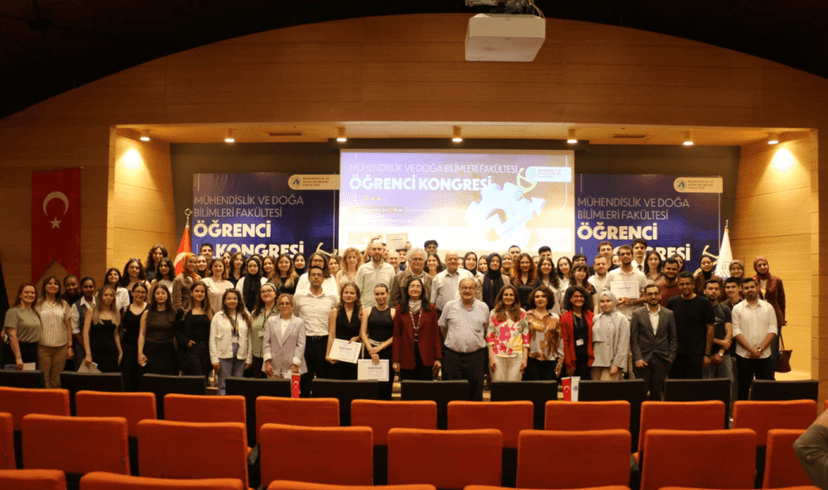
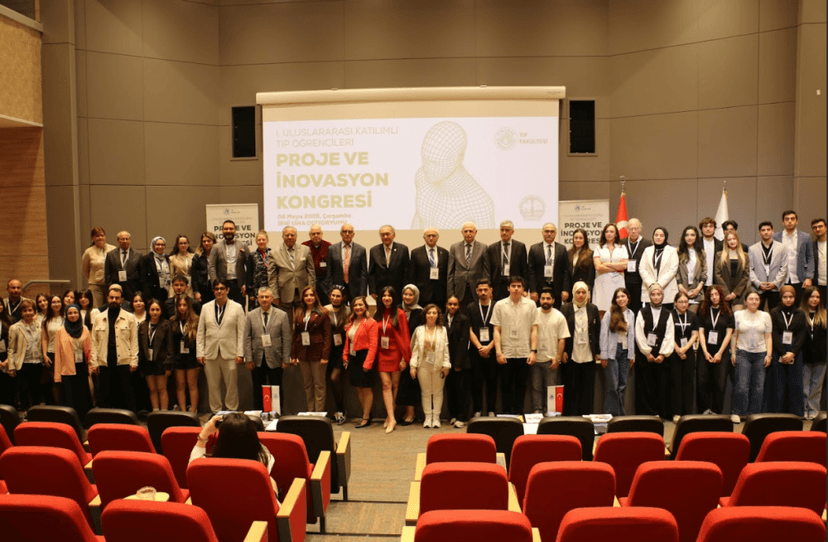
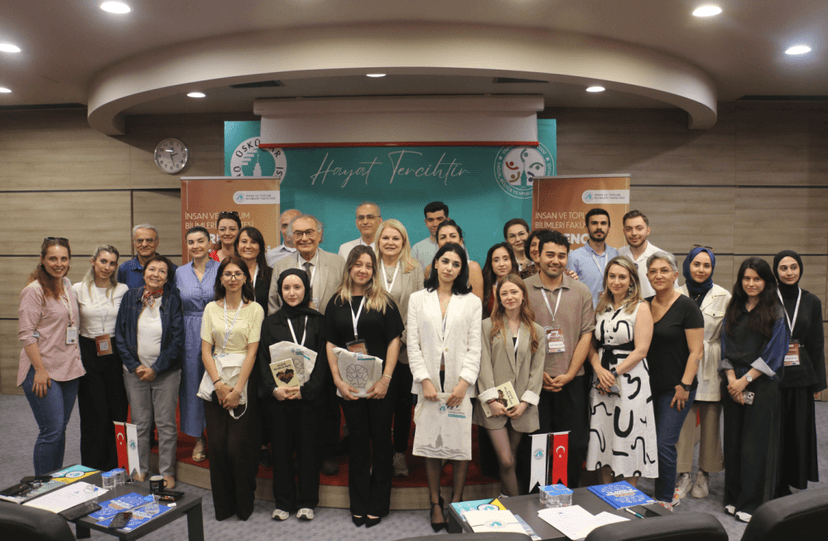
The first student conference concluded with the students’ project presentations, the distribution of participation certificates, and a group photo.
Üsküdar News Agency (ÜHA)